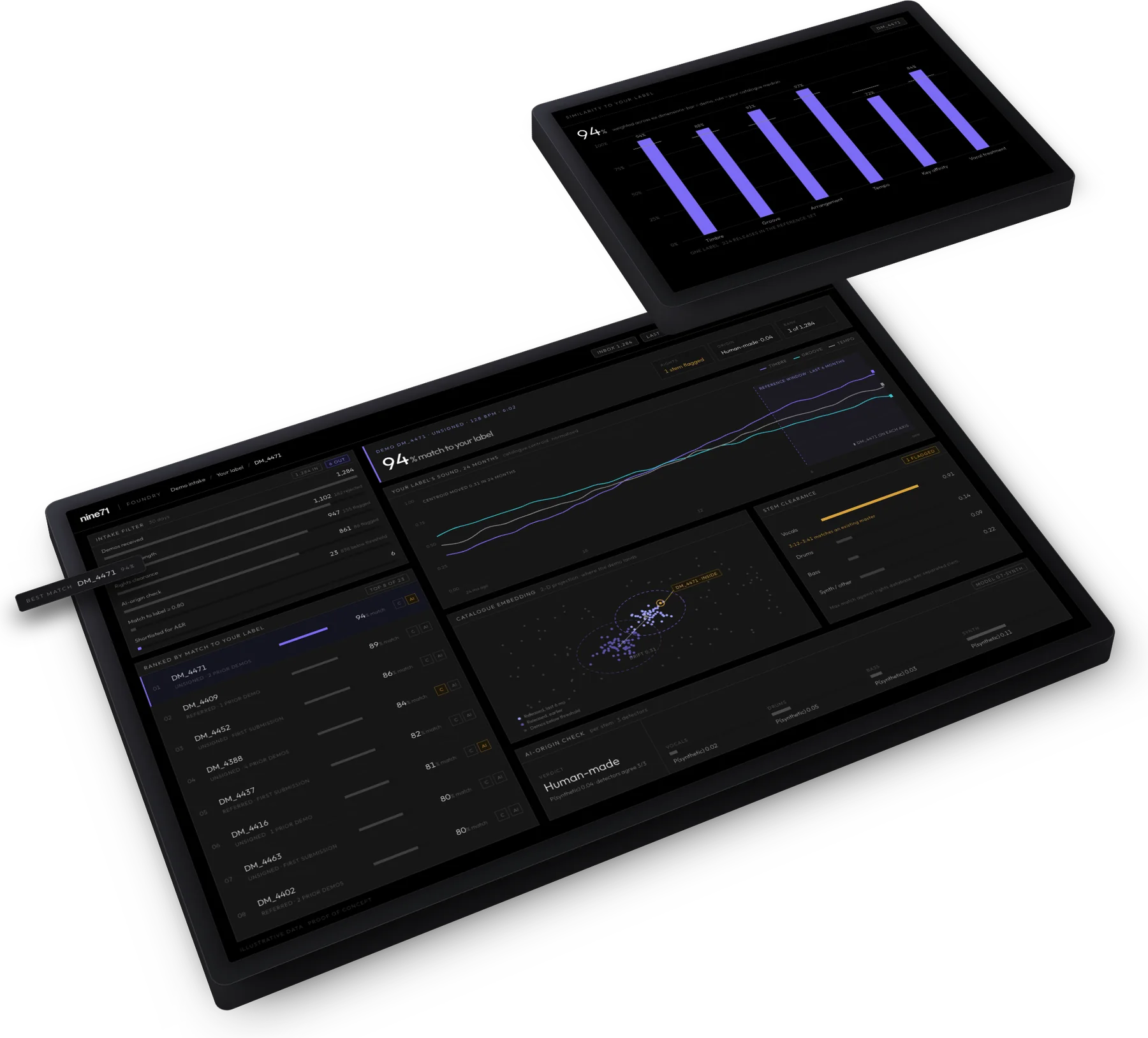
Foundry
Know where a record sits against an artist’s or a label’s catalog, in seconds, judged on how it sounds, not on who is posting about it.

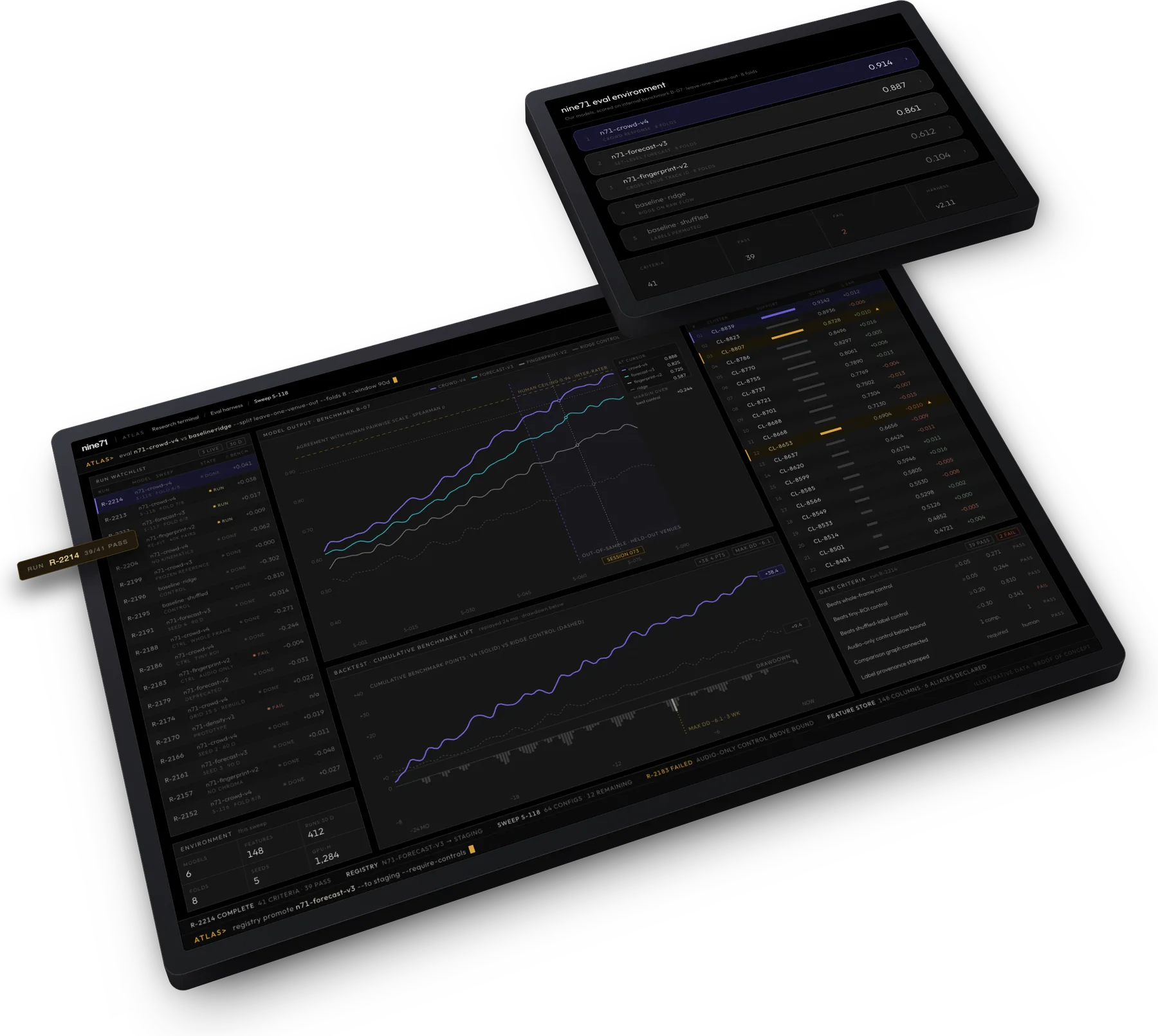
Tools for the people deciding what to sign, book and play next, built on what a crowd actually did, not on what the numbers online say.
Know where a record sits against an artist’s or a label’s catalog, in seconds, judged on how it sounds, not on who is posting about it.
The moments of a set that actually landed, ranked by how the crowd responded, each one with the clip, so you can see it for yourself.
Where an artist or a record is heading, not just where it stands, built on what Foundry and Signal measure on real floors.
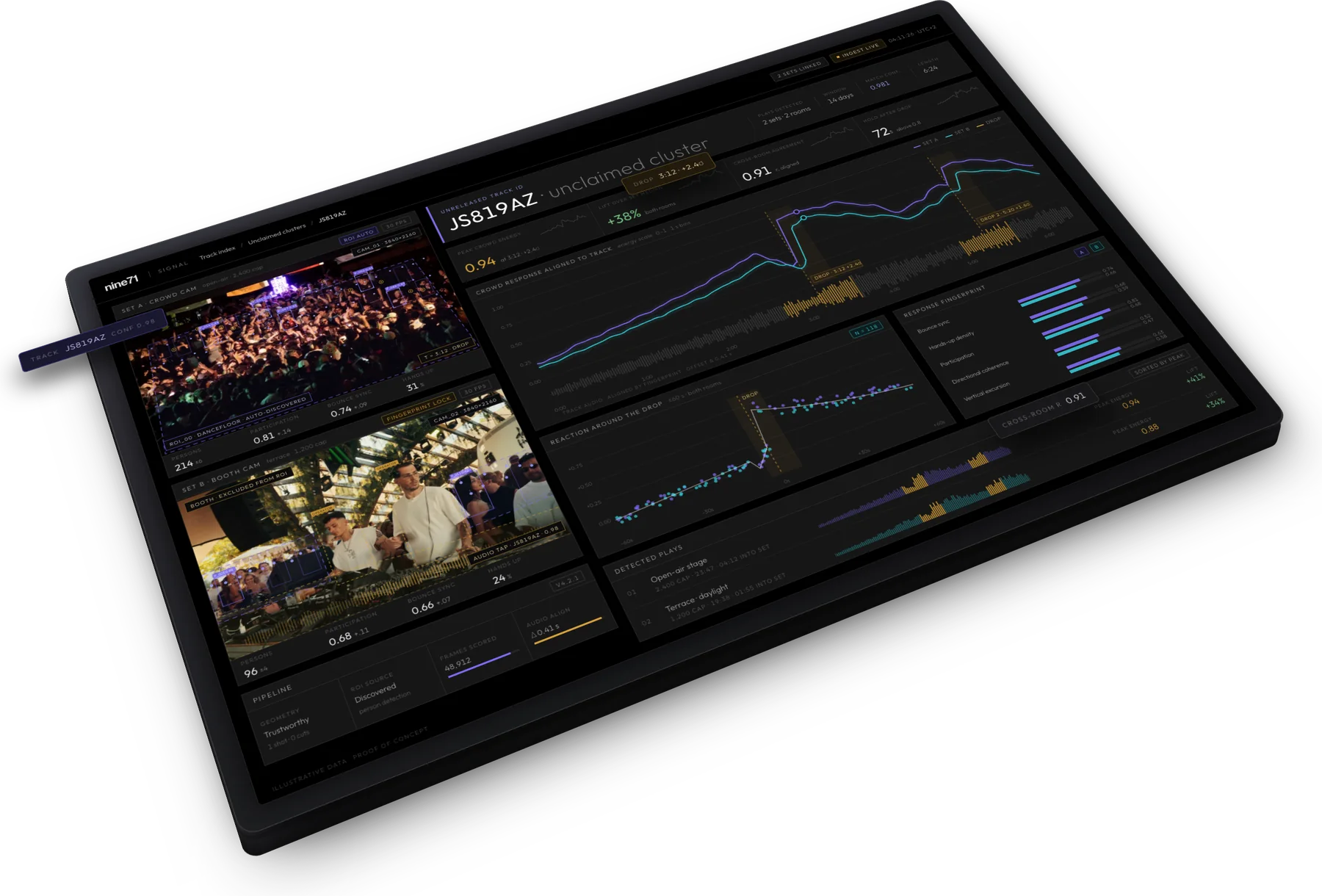
Every set produces the data. The floor ignites, stalls, and ignites again. nine71 turns that reaction into numbers that mean the same thing everywhere, so DJs, venues, and A&R teams can work from signal instead of vibes.
Signal turns a two-hour set into a ranked read of the night: where the energy went, which moments it went to, and what was playing when it did.
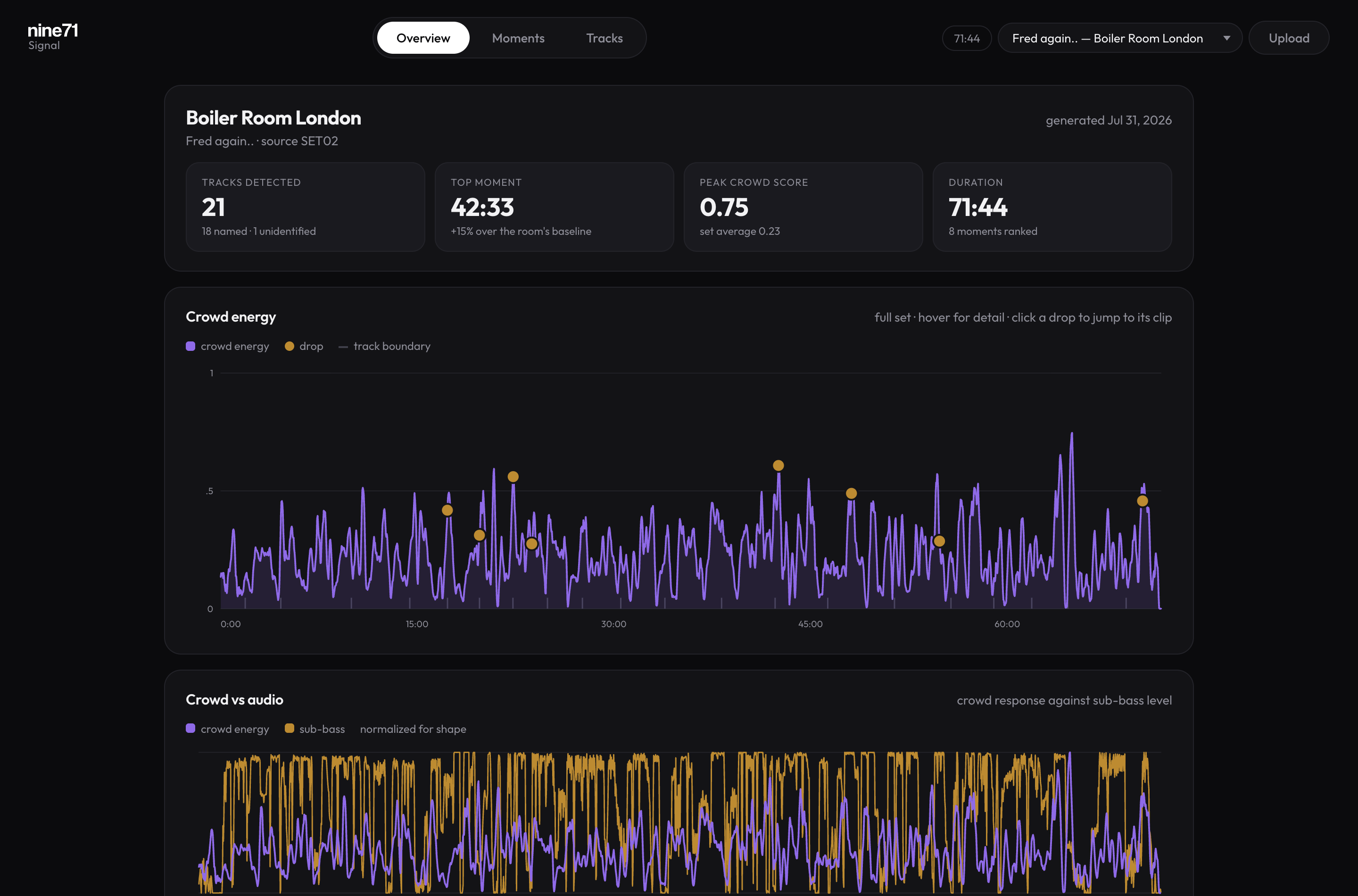
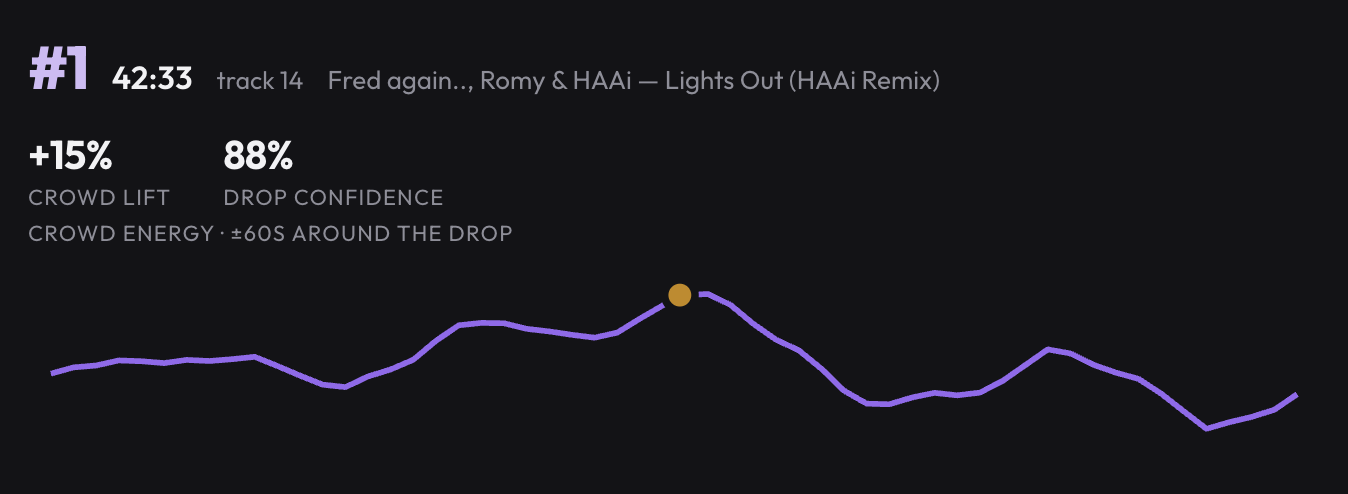
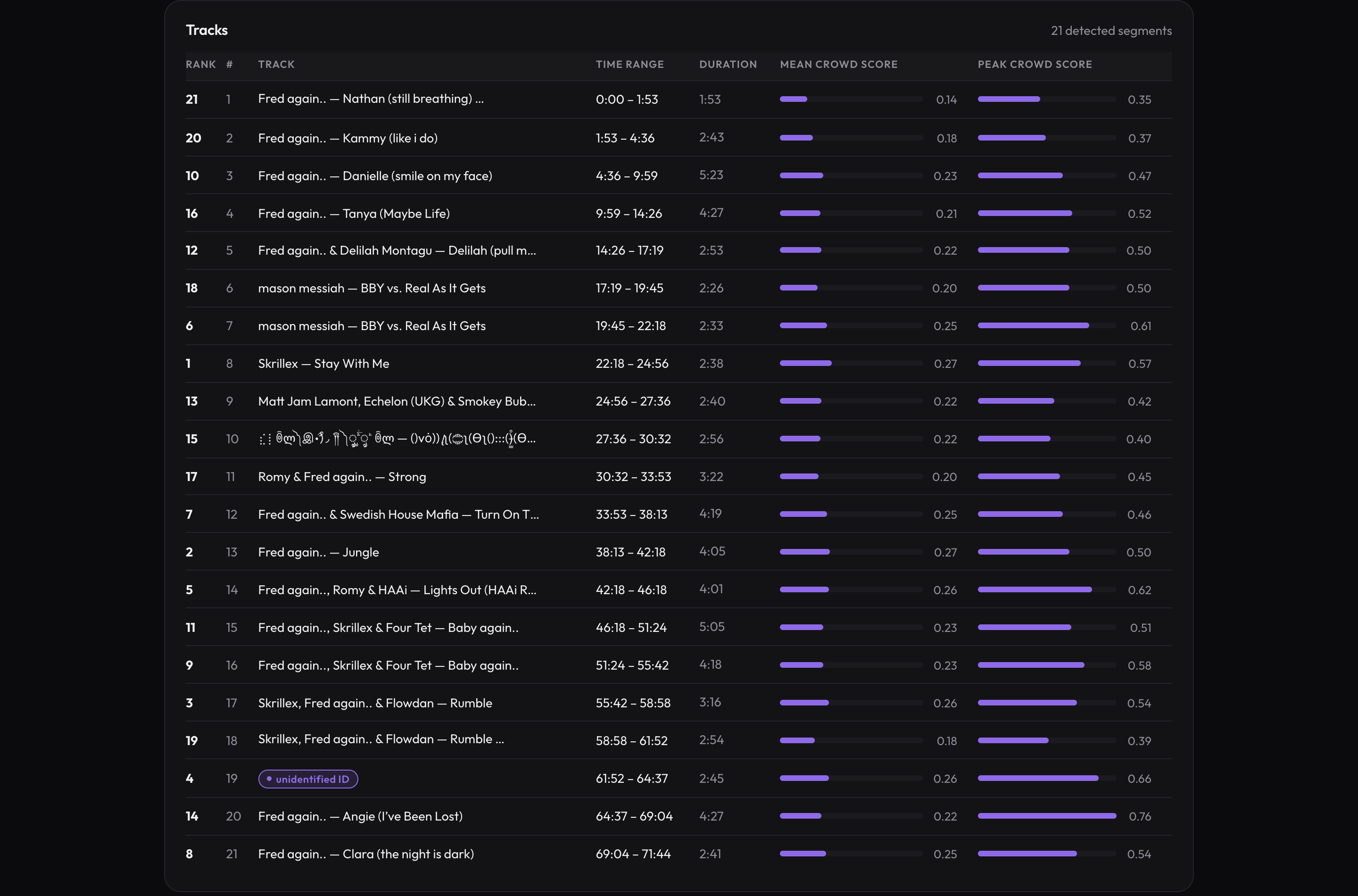
A real report from the nights above, not an illustration. Signal is a private demo, so .